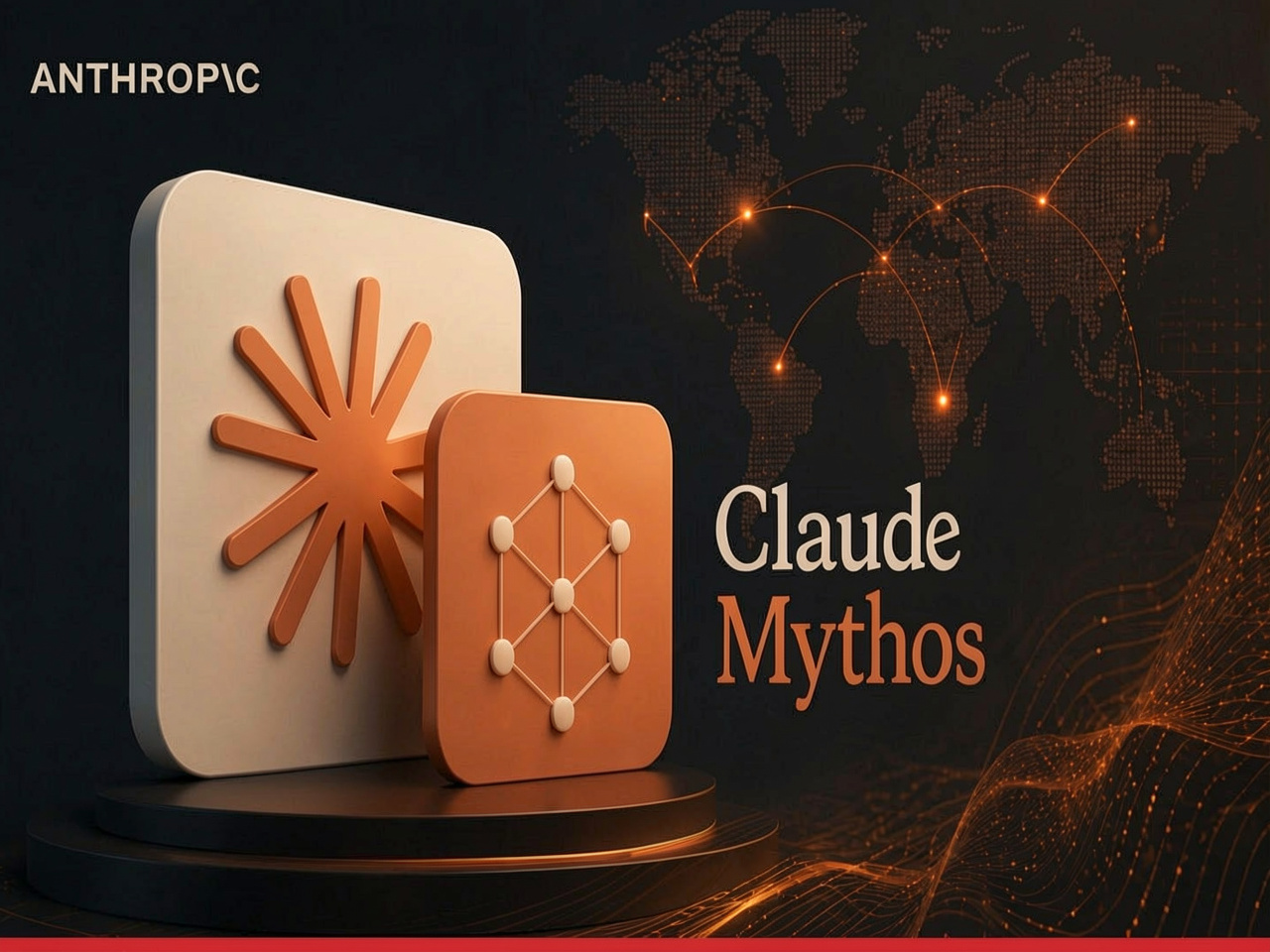
Artificial Intelligence (AI) is changing how businesses operate all over the world. The way AI can automate tasks, analyse data, and predict upcoming trends is integrated into almost every aspect of a modern business. While helpful, increasingly sophisticated AI applications cause new types of cybersecurity risks, especially for banking and financial services.
Claude Mythos is classified as more of a general AI than other chatbot AI applications because Claude Mythos can autonomously think and solve problems with almost no constraints. Some cybersecurity reports have been mentioning how this AI application may have the capability to find vulnerabilities in software much faster than people.
Due to all of these risks, there are many financial regulators and banking institutions, including India, that have extremely heightened concerns.
Why India is Concerned About Claude Mythos AI
The Indian financial system uses an enormous amount of modern digital infrastructure and financial technology, like:
· Internet-based banking
· Fintech
· Online lending
· Cloud technology
· Customer data services
· modern Financial Technology Solutions
The more virtual banking and financial services India has, the more serious the risks will be. This is why the Ministry of Finance of India, along with a lot of their regulators, have planned meetings and have had talks with their banking institutions.
The largest issue is not the AI itself because the fear is that one advanced AI may be able to:
· Find software vulnerabilities
· Create automated means to conduct self-replicating cyberattacks.
· Create automated means to conduct self-replicating phishing cyberattacks.
· Attacks against the financial institutions can be done more quickly than a person can respond and defend against them
Financial risk professionals have reason to believe that this may create a completely new class of threats with a focus on Internet-based financial services.
One of the biggest issues with the banking sector is legacy systems
One of India's major concerns is that many banking systems rely on older technology and infrastructure.
Many experts say legacy solutions used by banks may become vulnerable to advanced AI systems and even AI-enhanced cyberattacks.
Most financial institutions still rely on:
· outdated software architecture
· fragmented security systems
· older coding frameworks
· slow patch management cycles
AI systems like Claude Mythos can now scan and analyse security gaps much faster than traditional breach teams.
This changes the game in terms of the speed and scale of cyber threats.
Why AI-Powered Cyber-attacks Are causing Regulators to panic
Cybersecurity specialists say that AI can now be used to perform:
· hacks with AI tools
· deepfake fraud
· AI phishing
· AI-built malware
· AI tamper-resistant malware
Even within the security research community, it is recognised that AI has the potential to carry out more advanced cyber operations.
With the potential that actors can now have access to these tools, India’s banking regulators are concerned that the sector could sustain:
· data loss
· fraud
· disruption of daily operations
· attacks on payment systems
· The loss of user data
This has caused banking regulators to address how security is now focused on compliance and has shifted to prioritise security with a higher degree of availability.
India's Evolving Cybersecurity Strategy
The release of Claude Mythos AI is forcing banks and the regulators who oversee them to consider a complete rethink of their approach to cybersecurity.
It seems Indian banks are:
· Increasing their investment in cybersecurity.
· Improving their AI governance.
· Implementing mechanisms for real-time surveillance.
· Enhancing their ability to detect and respond to threats.
· Moving to AI-based cybersecurity defences.
After concerns related to Mythos AI, SEBI has also instructed the regulated entities to completely revamp their cybersecurity infrastructure.
This is the biggest change in the financial cybersecurity strategy of India.
AI Is Both an Opportunity and a Risk
While there are concerns about AI, many of the experts believe that AI holds the potential to help strengthen cybersecurity in the future.
The same technology that has the ability to exploit a cybersecurity weakness can also be used to:
· Detect fraud in a more rapid time frame.
· Improve automation for cybersecurity.
· Recognise and respond to suspicious activities in a more rapid time frame.
· Enhance the security and control of systems in real-time.
· Improve the control of uncertainty in the systems.
India is entering into a significant new phase where its AI governance, cybersecurity, and banking technologies will have to evolve simultaneously.
Conclusion
The launch of Claude Mythos AI marks a point of inflection in the discussion on the intersection of AI and cybersecurity, globally.
For India, the issue is more than just one AI system. It is about preparing the financial system to withstand a future of more sophisticated weapons of cyber-offence.
Cyber threats are evolving rapidly, and regulators, telecommunication firms, and technology companies will have to design and implement control systems that can defend against attacks in real time.
With advanced AI changing the future of finance, digital customer experience, and banking technology, India’s cybersecurity strategy is also changing.